PPARCセミナー (2025/10/31)

PPARCセミナー (2025/10/31)
(1)
[Name]
Naoko Takatori
[Title]
ハレアカラT60望遠鏡のファイバー面分光器を用いた水星Na外圏大気の時空間変動の観測
Observation of spatio-temporal variations in Mercury’s sodium exosphere using the Haleakala T60 telescope with the fiber-fed spectrograph
[Abstract]
水星はアルカリ金属を含む非常に希薄な外圏大気を有している。特に中性NaのD線(589.0nm, 589.6nm)による共鳴散乱発光は明るく、地上の中小口径望遠鏡でも観測可能である。地球磁気圏と比較して小さい水星磁気圏は、太陽風との相互作用により数分のオーダーで変動していると推定され、中性の外圏大気も同様の時間スケールで変動すると予想される。これまでの地上観測では、水星Na外圏大気に南北の両極にピークを示すダブルピーク(DP)発光が見られることがあり、南北輝度比は数十分のスケールで変化する。この時間スケールは、Na生成要因の1つが磁気圏由来のイオンスパッタリングによるとする場合のそれと一致しうる。
従来の地上望遠鏡観測では、スリット分光によって空間・時間変動が捉えられてきた。この手法で2次元空間分布を捉えるにはスリットの移動が必要で、水星全球の分光撮像観測には約1時間要する。従来観測されてきた数分オーダーの変動はスリット位置を固定した狭視野観測で得られたものであり、全球分布の変動観測には新たな手段が必要となる。
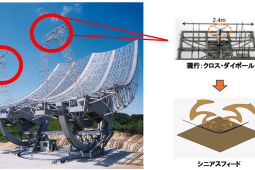
これまで東北大学60cm望遠鏡(T60)にファイバー面分光器と補償光学(Adaptive Optics)システムを結合させ、水星Na外圏大気の全球空間分布の変動を数分スケールで捉えることを目指した開発が進められてきた。私たちの目標は、2026年末のBepiColombo探査機の水星周回軌道投入後に、この探査機による外圏大気リモート観測および太陽風・磁気圏in-situ観測と協調した観測を行うことである。
今までに、Na発光および表面反射光を2次元分布で表し、水星輝度分布モデル(Hapkeモデル)を表面反射光と比較することで、ディスク位置を決定・表示する解析スキーム構築が終了した。現在、これらの解析の複数日時の観測への適用と柱密度への変換を行っている。本セミナーでは、その進捗状況を発表する。
Mercury has an extremely tenuous exosphere containing alkali metals. In particular, the resonance scattering emission from the neutral Na D-lines (589.0 nm, 589.6 nm) is bright enough to be observed even with small to medium-aperture ground-based telescopes. The small magnetosphere of Mercury, compared to Earth’s, is estimated to fluctuate on the order of several minutes due to interaction with the solar wind, and the neutral exosphere is expected to fluctuate on a similar timescale. Previous ground-based observations have occasionally shown a double-peak (DP) emission in Mercury’s Na exosphere with peaks at both the north and south poles, and the north-south brightness ratio changes on a timescale of tens of minutes. This timescale is consistent with that expected if one of the Na production mechanisms is ion sputtering originating from the magnetosphere.
Conventional ground-based telescope observations have captured the spatial and temporal variations using slit spectroscopy. To capture the 2D spatial distribution with this method, the slit must be moved, requiring about an hour for a spectroscopic imaging observation of the entire Mercury globe. The minute-scale variations previously observed were obtained through narrow-field observations with a fixed slit position, indicating that a new method is required for observing the global distribution fluctuations.
Development has been underway to couple an integral field spectrograph (IFS) and an Adaptive Optics (AO) system to the Tohoku University 60cm Telescope (T60) to capture the global spatial distribution fluctuations of Mercury’s Na exosphere on a minute scale. Our goal is to conduct coordinated observations with the BepiColombo spacecraft’s remote sensing of the exosphere and in-situ observations of the solar wind and magnetosphere after the probe enters Mercury’s orbit at the end of 2026.
We have completed the construction of an analysis scheme that represents the Na emission and surface reflected light in a 2D distribution and determines and displays the disk position by comparing the surface reflected light with a Mercury brightness distribution model (Hapke model). Currently, we are applying these analyses to observation data from multiple dates and converting them into column densities. This seminar will present the progress of this work.
(2)
[Name]
Fuminori Tsuchiya
[Title]
Plasma environment of Jovian icy moons and current status of LAPYUTA.
[Abstract]
Europa, one of the Galilean moons, is one of the bodies in the Solar System with the potential for a habitable environment in its subsurface ocean.
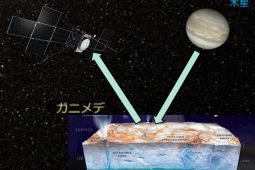
It orbits Jupiter at an average distance of 9.4 Jovian radii and is embedded in magnetospheric plasmas, including iogenic heavy ions and magnetospheric hot plasma. These plasmas are injected into Europa’s surface, altering the surface environment. Understanding how these plasmas are generated (1) and transported to Europa’s surface (2), and how they alter the surface environment and atmosphere of the moon (3), is important.
One of the outstanding issues regarding topic (1) is how materials escape from Io’s atmosphere to the magnetosphere. Observing Io’s exosphere is crucial to solving this issue. Regarding topic (2), we have developed a method to derive the mass loading rate (i.e. the outward transfer rate) of iogenic plasma from Io to Europa’s orbit. We found that the mass loading rate changes three to fourfold in association with Io’s volcanic activity. This method provides a means of understanding changes in the plasma environment at Europa. Regarding topic (3), previous studies have investigated the surface albedo of Europa at various wavelengths. Further observations are needed to characterize the surface environment, for which we plan to use LAPYUTA.