PPARCセミナー (2025/10/03)

PPARCセミナー (2025/10/03)
(1)
[Name]
Haruki Okuda
[Title]
An implication of detecting the internal modulation in a pulsating aurora : a conjugate observation by the Arase satellite and all-sky imagers
(Review)
[Abstract]
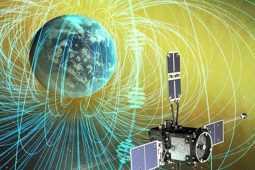
脈動オーロラ(PsA)を生成する物理的メカニズムは、磁気圏の赤道面付近で発生する電子とコーラス波の相互作用であると考えられている。近年の「あらせ」衛星による高時間分解能観測から、個々の光学的脈動の中に見られる特徴的なサブ秒周期のきらめき(3±1 Hz)であるPsAの内部変調の有無は、コーラス波のエレメント構造の離散性(discreteness)と密接に関連していることが明らかになった。しかし、どのような物理パラメータがエレメントの離散性と内部変調の存在を制御しているのかは、依然として不明であった。本研究では、地上カメラと「あらせ」衛星によるPsAとコーラス波の共役観測イベントを解析し、内部変調の有無を決定するパラメータについて議論する。イベント中、内部変調の発生頻度は時間とともに増加した。衛星の波動データは、内部変調が不明瞭であったときのエレメントの繰り返し周波数が約6Hzであったのに対し、内部変調が明瞭であったときには約3Hzであったことを示した。粒子データは、この周波数の違いが高温電子(hot electron)の密度と温度異方性の変化によって引き起こされたことを示唆している。内部変調は、粒子インジェクションの後に高温電子の密度が減少し、温度異方性が緩和したときに明瞭に観測された。本研究の結果は、地上からの内部変調の観測が、磁気圏における高エネルギー電子密度や温度異方性といった物理パラメータを推定する手段となりうる可能性を示唆するものである。
(2)
[Name]
Takeru Katoh
[Title]
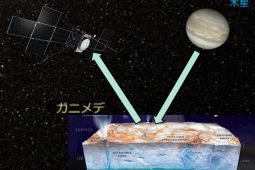
Ray Tracing for Jupiter’s Icy Moon Ionospheric Occultation of Jovian Auroral Radio Sources(review)
[Abstract]
The ionospheres of Jupiter’s icy moons have been observed by in situ plasma measurements and radio science. However, their spatial structures have not yet been fully characterized. To address this, the outhers developed a new ray tracing method for modeling the radio occultation of the ionospheres using Jovian auroral radio sources. Applying their method to Jovian auroral radio observations with the Galileo spacecraft, they derived the electron density of the ionosphere of Ganymede and Callisto. For Ganymede’s ionosphere, they found that the maximum electron density on the surface was 76.5–288.5 cm−3 in the open magnetic field line regions and 5.0–20.5 cm−3 in the closed magnetic field line region during the Galileo Ganymede 01 flyby. The difference in the electron density distribution was correlated with the accessibility of Jovian magnetospheric plasma to the atmosphere and surface of the moons. These results indicated that electron-impact ionization of the Ganymede exosphere and sputtering of the surface water ice were effective for the producing Ganymede’s ionosphere. For Callisto’s ionosphere, they found that the densities were approximately 350 and 12.5 cm−3 on the night side hemisphere during Callisto 09 and 30 flybys, respectively. These results combined with previous observations indicated that atmospheric production through sublimation controlled the ionospheric density of Callisto. This method is also applicable to upcoming Jovian radio observation data from the Jupiter Icy Moon Explorer, JUICE.
(3)
[Name]
Hiroshige Yamaguchi
[Title]
(TBD)
[Abstract]
One of the most prominent sources for energetic particles in our Solar System are huge eruptions of magnetised plasma from the Sun, known as coronal mass ejections (CMEs), which usually drive shocks that accelerate charged particles up to relativistic energies. In particular, energetic electron beams can generate radio bursts through the plasma emission mechanism, for example, type II and accompanying herringbone bursts.
In this study, they observed type Ⅱ bursts andherringbone bursts. They investigate the acceleration location, escape, and propagation directions of various electron beams in the solar corona and compare them to the arrival of electrons at spacecraft by using a synthesis of remote and direct observations combined with coronal modeling.
The key finding is that while both Type II and herringbone bursts match the arrival time of near-relativistic electrons at spacecraft, only the herringbone bursts propagate along open magnetic field lines that are likely to be magnetically connected to the spacecraft. This strongly suggests the herringbone bursts point to the primary source of the in situ electrons.
This results indicate that if the in situ electrons are indeed shock-accelerated, the most likely origin of the in situ electrons arriving first is located near the acceleration site of herringbone electrons. This is the only region during the early evolution of the shock where there is clear evidence of electron acceleration and an intersection of the shock with open field lines, which can be directly connected to the observing spacecraft.